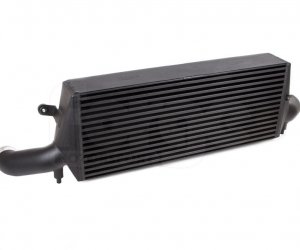
Forge Motorsport having a worldwide reputation of making industry leading parts for an array of performance vehicles is proud to present the most versatile Audi RS3/RSQ3/TTRS performance intake kit on the market.
FMINDK47 incorporates and includes modular couplers so that it can fit any size turbo inlet you may choose to run. The machined end of the carbon intake where it meets the inlet tract to the elbow has a 4”(102mm) threaded billet attachment which tapers up to the huge 6” pleated filter on the intake side. At this billet alloy junction, it enables the end user to have interchangeable adaptors. Having this amount of adjustment with a vast increase in airflow allows this product to be suitable for stock or aftermarket turbo inlet solutions whether manufactured from silicone or aluminium. This enables the enthusiast to interchange the adaptors depending on if its currently stock or modified. FMINDK47 will support your RS3 to literally any state of tune. Using carbon fibre brings obvious benefits of strength, weight, and aesthetics. However, a part that is often forgotten is its low thermal conductivity, which means it reduces heat soak and transmission of heat to nearby items. Replacing metal or plastic inlet solutions for FMINDK47 will help decrease IAT’s and increase the volume of air supplied to your vehicles engine that is compressed by the turbo charger. This has a better effect on performance when cool as this is to provide the engine with more oxygen (denser air), thus improving the combustion in each cylinder. In addition, by regulating and reducing the air temperature, it also increases the reliability of an engine by keeping the AFRs (air fuel ratios) in each cylinder at a safe level, which in turn, can increase an engines power due to the air being cooler. A bigger bang is then created within the cylinder, providing the correct amount of fuel is added. This can equate to an increase in BHP and torque.
With a completely stock tune vehicle was able to see peak gains of 6BHP. However further analysis of the dyno graph shows that this peak BHP figure was produced 200RPM earlier (6097RPM instead of 6298RPM). Additionally, the power curves were smoothed across the entirety of the rev range, with gains seen across the board. To pull out some snapshots from the rev range as examples, at 3000RPM using just FMINDK47 saw an increase of 25BHP, and at 4500RPM there was an increase of 17BHP. Torque figures saw similar gains across the rev range, with a peak torque figure increasing by 17NM at around 100RPM earlier. When we analyse the dyno graph across the rev range, at 3000RPM using just FMINDK47 saw an increase in 55NM and at 4500RPM there was an increase of 23NM.
Made by